
Alameda County Arrest News Sources
Official police publications lead the local media landscape here. The Oakland Police Department posts near-daily PDFs covering incidents, arrests, and other activity, with month and year archives behind them. Fremont Police puts out a weekly review when staffing permits, and an edition may arrive with statistics or highlights missing. Hayward's one-week blotters carry totals and selected events, and the arrest count expressly includes cite-and-release cases.
Keep the limits in mind. These are police-stage records, not jail censuses. An Oakland citation may never reach Santa Rita. A Fremont arrestee might sit in the city detention facility while waiting for county transport. Hayward's weekly total can never match a current-custody roster, since some of those people were cited and released. ACSO news and social channels add selected sheriff cases and alerts, but they are not full booking feeds.
Alameda News Outlet Coverage
Local reporting offers things the logs cannot. Interviews, court documents, public-record work, and neighborhood context all surface in these stories. Photos vary widely. You might see scenes, agency-supplied suspect images, portraits, or nothing at all. So treat no outlet here as a complete mugshot index.
| Outlet | Coverage | Photos and cadence |
|---|---|---|
| ACSO News | Official sheriff releases and selected cases | Selective agency images; not a roster |
| East Bay Times | Regional Crime & Public Safety, including all three mapped cities | Daily or near-daily stories; images vary |
| The Oaklandside | Oakland public safety, courts, and emergency response | Active explanatory reporting; no systematic mugshots |
| The Berkeley Scanner | Frequent Berkeley police and court reporting | May use official wanted images when newsworthy |
| Pleasanton Weekly | Tri-Valley article coverage | Story-specific images, not a roster |
| Patch and Tri-City Voice | Selected Fremont and Hayward matters | Article basis; official city logs remain primary |
The East Bay Times Crime & Public Safety stream takes the broad regional route through county crime coverage.
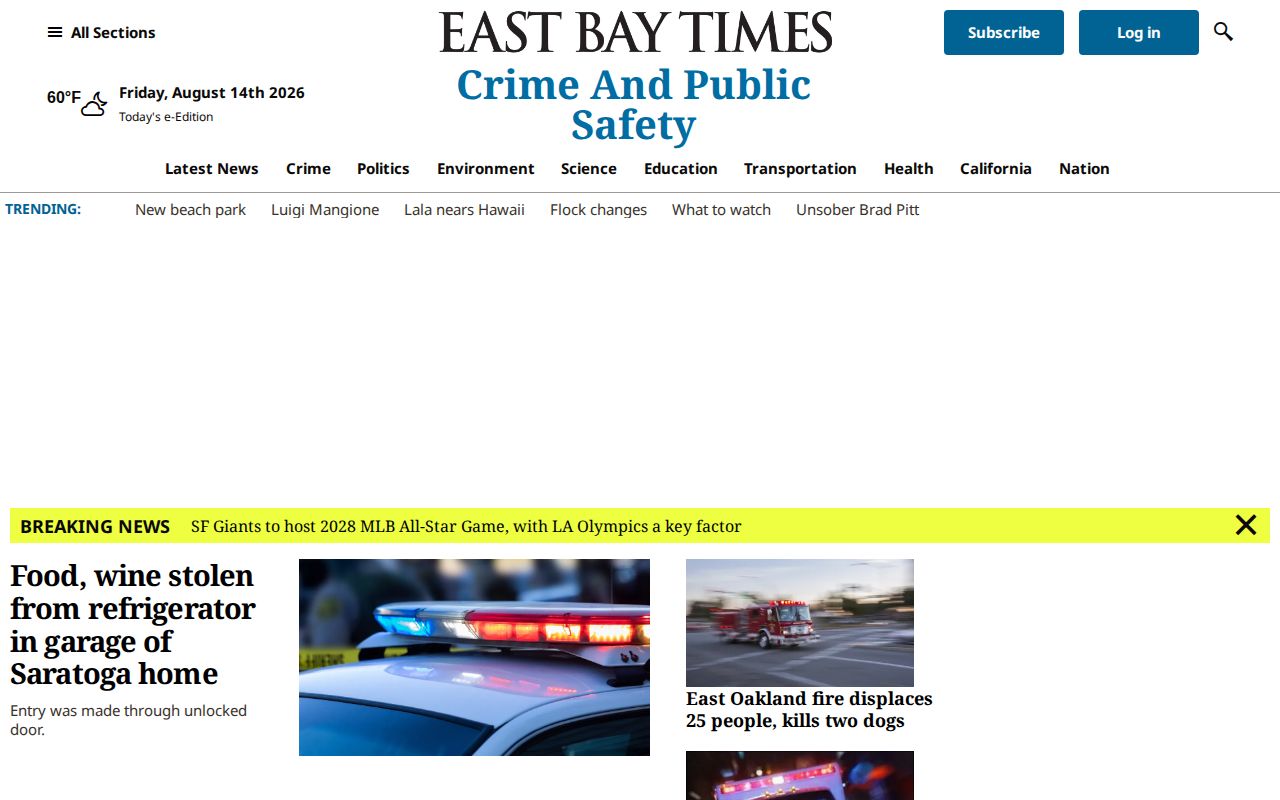
Its stories can point you toward an agency release or a court file. Just remember the newsroom is not the place for live custody status.
Alameda City Arrest Log Timing
The three biggest cities publish on very different clocks. OPD's Daily Log is the most granular and keeps deep archives, though it reads as a chronology rather than a named custody roster or photo gallery. Fremont's Week in Review works in weekly windows and may skip an edition when staffing falls short. Hayward's weekly PDFs sometimes land in batches and include cite-and-release events.
Timing explains most apparent gaps. A report can precede Santa Rita acceptance, follow a release, or describe an event that never produced county custody at all. So search the city publication for event context, the ACSO locator for current county custody, the city and sheriff records units for releasable documents or a photo, and the court for filed charges.
City-specific records paths are laid out for Oakland busted mugshots and daily logs, with parallel pages for Fremont and Hayward in the site navigation.
Alameda Mugshots in the News
A booking image reaches a story in a few ways. An agency may push it out proactively, a journalist may request it, or a site may reuse an older copy. California Government Code §7923.610 requires specified arrest facts but says nothing about the booking photograph itself. ACSO's public locator does not verify a displayed image, so a requester may need a targeted request through NextRequest.
Other rules shape the picture. California Penal Code §13665 generally limits police social-media booking photos for nonviolent arrests and usually calls for removal within fourteen days unless an exception applies. Fremont went further and adopted a policy against routine proactive booking-photo releases unless the suspect presents a threat or danger and a captain approves. The result is that social streams stay selective and make poor historical archives.
Absence and presence both mislead here. One agency releases a photo for urgent investigative need while another ordinary booking gets no public image at all. A missing picture does not mean no arrest happened.
Hayward Arrest News Checkpoints
Hayward does more than its weekly blotter. The city also publishes occasional DUI-checkpoint result releases. One official release reported 568 vehicles screened, a single arrest, and twenty-two citations. Those figures describe an enforcement event, not a named roster. They cannot identify the arrested person or establish any citation's outcome.
This is a distinctive Alameda County pattern. The checkpoint story gives you place, agency action, and totals, while the individual path still runs through HPD records, a Santa Rita custody search if county booking occurred, and a court case if prosecutors filed. Aggregate context and a person-level record should never be merged.
Unofficial Alameda Mugshot Sources
Three county-local secondary sections stand out. They follow official sources in value because none can confirm present custody or case outcome. RecentlyBooked claims a rolling thirty-day collection with several daily updates, but its own Alameda copy conflicts on whether county images are provided at all. Mugshots.com held roughly 2,200 older Alameda entries, concentrated between 2004 and 2017. Muglist showed small twenty-four-hour, seven-day, and thirty-day counts and claimed ongoing roster-derived updates.
The RecentlyBooked Alameda page gives a feel for current-looking secondary coverage.
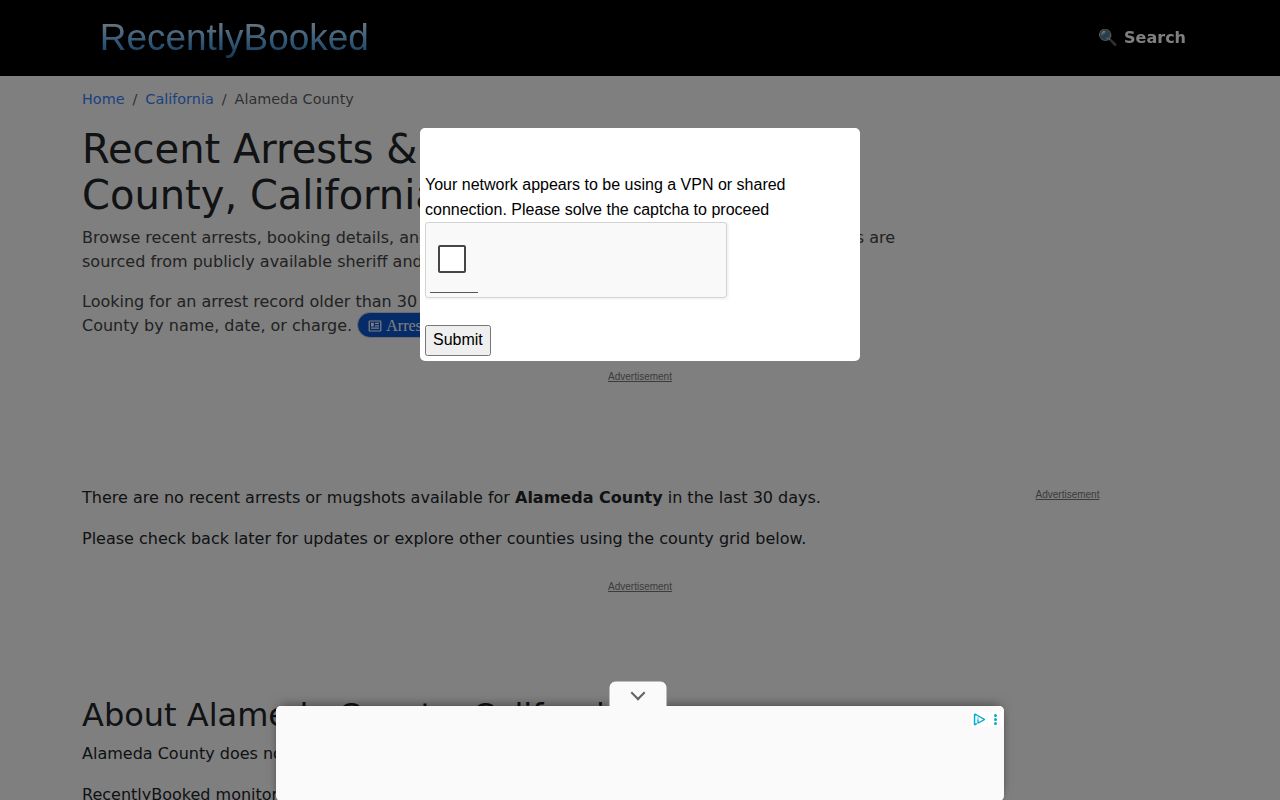
Its data and image provenance stay unofficial, and entries may be incomplete, stale, or at odds with the agency and court record.
The Mugshots.com Alameda archive works better as an older copy source than anything current.
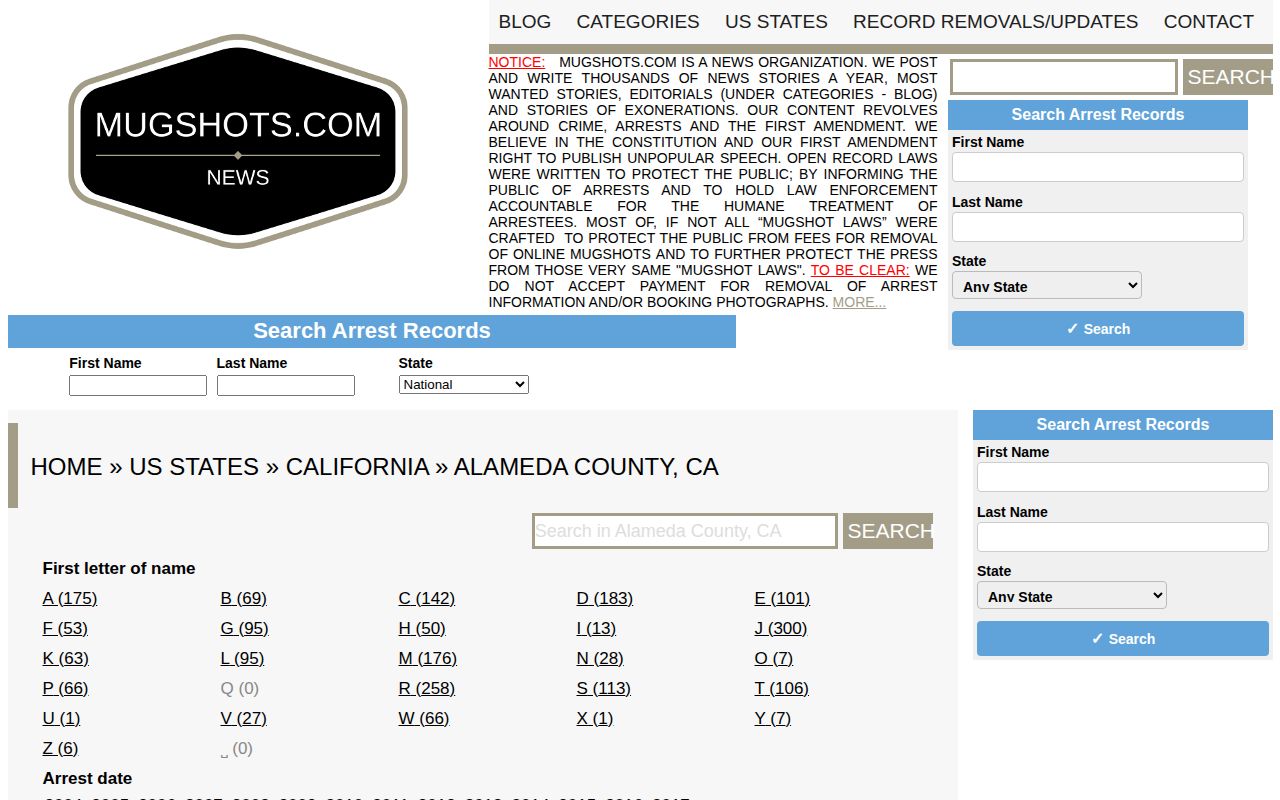
Its older year concentration makes it unsuitable for a current arrest check.
The Muglist Alameda page supplies another incomplete secondary view.
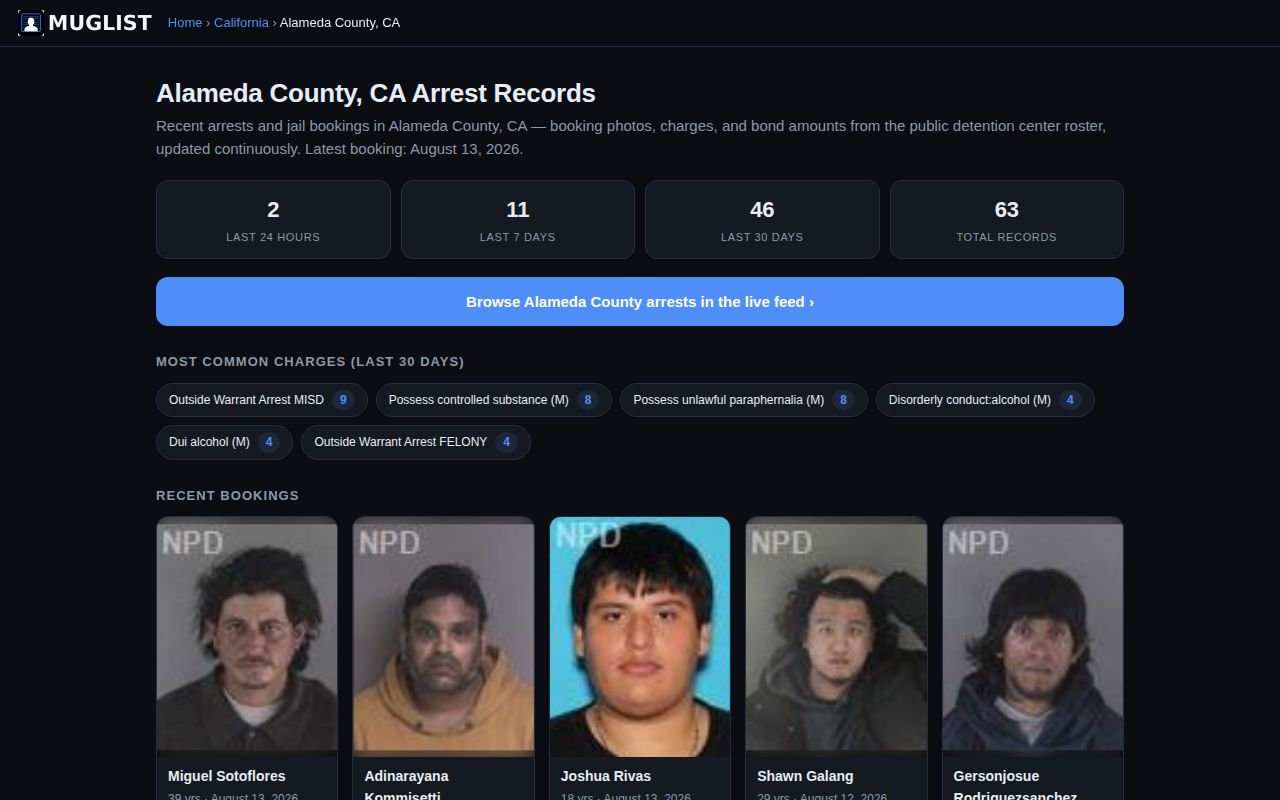
Counts differ from site to site. Any listing pulled from an unofficial source should therefore be checked against the Alameda County Sheriff's Office and the Superior Court before it's trusted. None of the big aggregator names turned up a verified Alameda-local section, so inventing local URLs for them would just mislead readers.
Trace Alameda News to Records
A smart search keeps every stage of the story separate instead of treating the article itself as the answer. Write down the outlet, the event date, the agency involved, the exact name spelling, and any report, PFN, or case number listed. Those details are what turn a headline into a usable record search.
- Open the originating official city or sheriff release and record the attributed charge and date.
- Search the ACSO Inmate Locator for current county custody, using PFN when available. No result can also mean cite and release, city holding, transfer, release, or withholding.
- For a released person or missing image, request the police record from the arresting agency and the booking record or photograph from ACSO.
- Search Alameda Superior Court Odyssey after a complaint is filed. Compare the filed charge with the police and intake versions.
- Follow hearings and final disposition. Correct any source that still displays a material error by using its documented free process.
The full Alameda County busted mugshot and booking search walks through roster fields, records requests, court tools, state-prison lookups, and federal custody. A news story is a starting clue. It is never the final word on an arrest record. Log the date of each search, too. Official systems can change what they show after a story runs.
Verify Alameda Arrest News Outcomes
Police language and court language rarely match. The reason is simple: they describe different moments. A press release covers suspected conduct and the booked charge. A prosecutor can file a different count, decline to file at all, or send the matter back for review. From there, the court tracks pleas, hearings, rulings, dismissals, and judgments. A headline freezes one early stage. It should not be quoted as a final result.
Start with Alameda Superior Court's Odyssey Smart Search by party name or case number. The Search Hearings tool also accepts a PFN, CEN, name, case number, or date range. The quick court-date finder only reaches a short future window. It is not a disposition database. Confidential and restricted material stays offline. Older or certified records may require the Criminal Record Request Portal.
Identity deserves equal scrutiny. Match the full name against age or date of birth where lawfully shown. Check the arresting agency, event date, PFN, and case number too. A common surname can point at the wrong person. So can a recycled article photo or an aggregator's alias. When a source gets something materially wrong, send the exact URL with proof from the controlling agency or court through that source's free correction channel.
Older reports may outgrow the online portal. The court says online criminal cases generally need activity since 2005. Many in-person files opened since 1974 still exist, though. A criminal-record request can pair the defendant's name with a case number, or a date of birth with an arrest or conviction date. Certified copies and archive retrieval carry published court fees, separate from any sheriff or police records charge. Ask the court for a current estimate before ordering a large file. Also confirm whether an ordinary copy would do the job instead of a certified one.